Divya
•


Zines are self-made, independent publications — part journal, part manifesto, part art object. Small in size, big in feeling, and made by people who had something to say and just said it.
The word comes from "fanzine," not from "magazine." These are publications made by fans, for fans. They exist outside the control of publishers, editors, or anyone who might say no. Zines started appearing in the 1930s in science fiction communities. They gained popularity in punk culture during the 1970s, became key to the Riot Grrrl movement in the 1990s, and have continued since then.
What makes a zine a zine isn't the format. It can be a folded A4 sheet, a hand-stapled booklet, a risograph-printed collection, or something entirely unexpected. The essence of a zine lies in its intention—there are no gatekeepers, no briefs, and no algorithms to satisfy. It's simply someone with something to share, creating it by hand, no AI used, we're very anti-AI when it comes to making these zines. Like really, really against AI art. Okay, you get the gist.
Zines have always been the voice of the overlooked, the underground, and the quietly angry. They have featured poetry, political rants, personal essays, illustrations, photography, recipes, rants, and love letters. They have documented subcultures that mainstream media ignored and preserved voices that would have otherwise faded away.
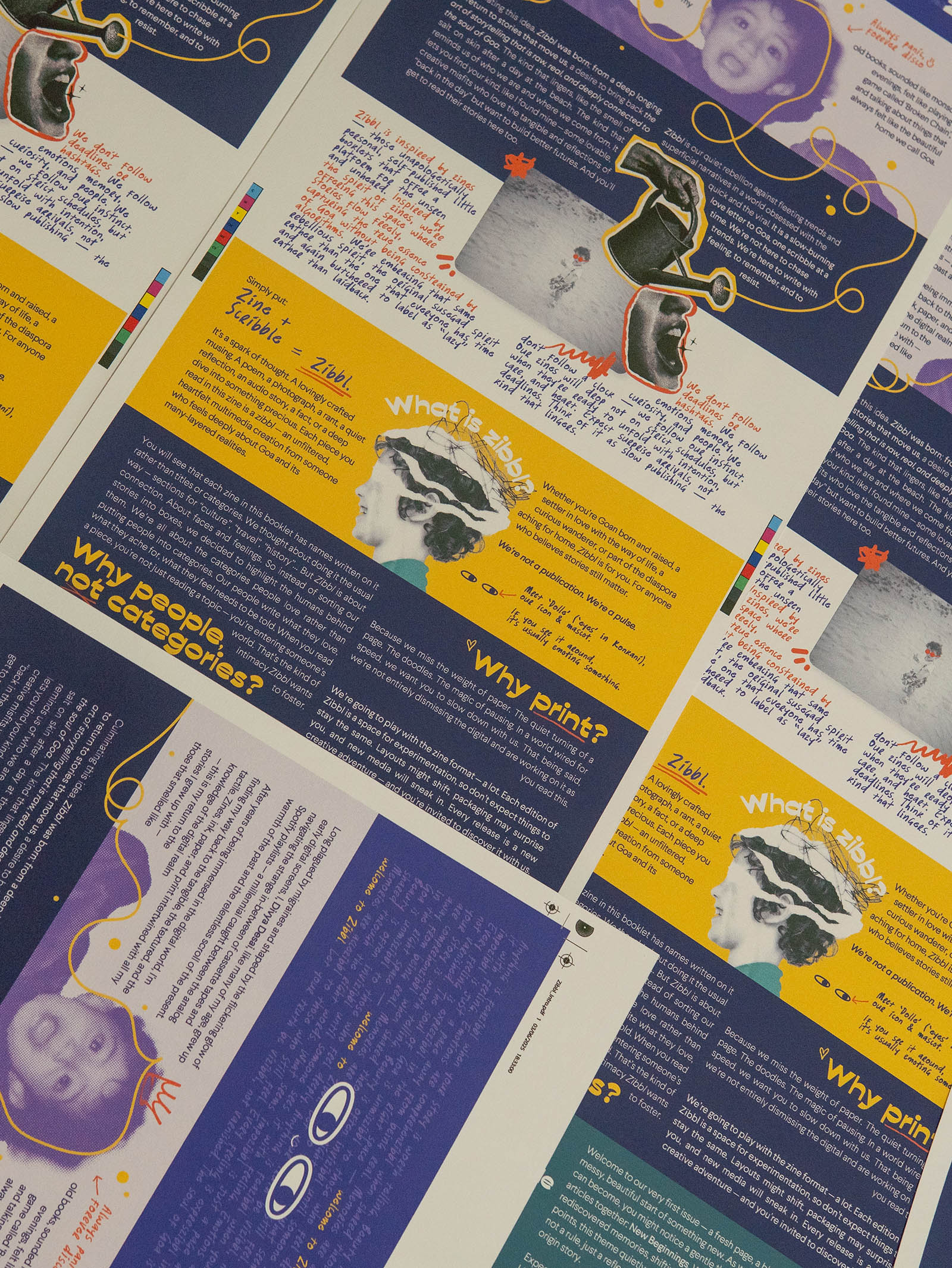
Today, zines exist between art objects and personal essays, between community archives and creative experiments. They are traded at zine fairs, included in bags at shows, and mailed across cities and countries to strangers who somehow feel like family.
The best zines feel like you are being handed someone's diary, but they meant for you to read it. So go make stuff, spread information, tell the world your views (secularly and respectfully). It's what we're trying to achieve.


