Chayne
+
Rhea
•

Zibblers Chayne Lobo and Rhea Lopez would like to shed a light on a decline of shared, community spaces for drying fish in Goa.
The Concept
From Rhea:
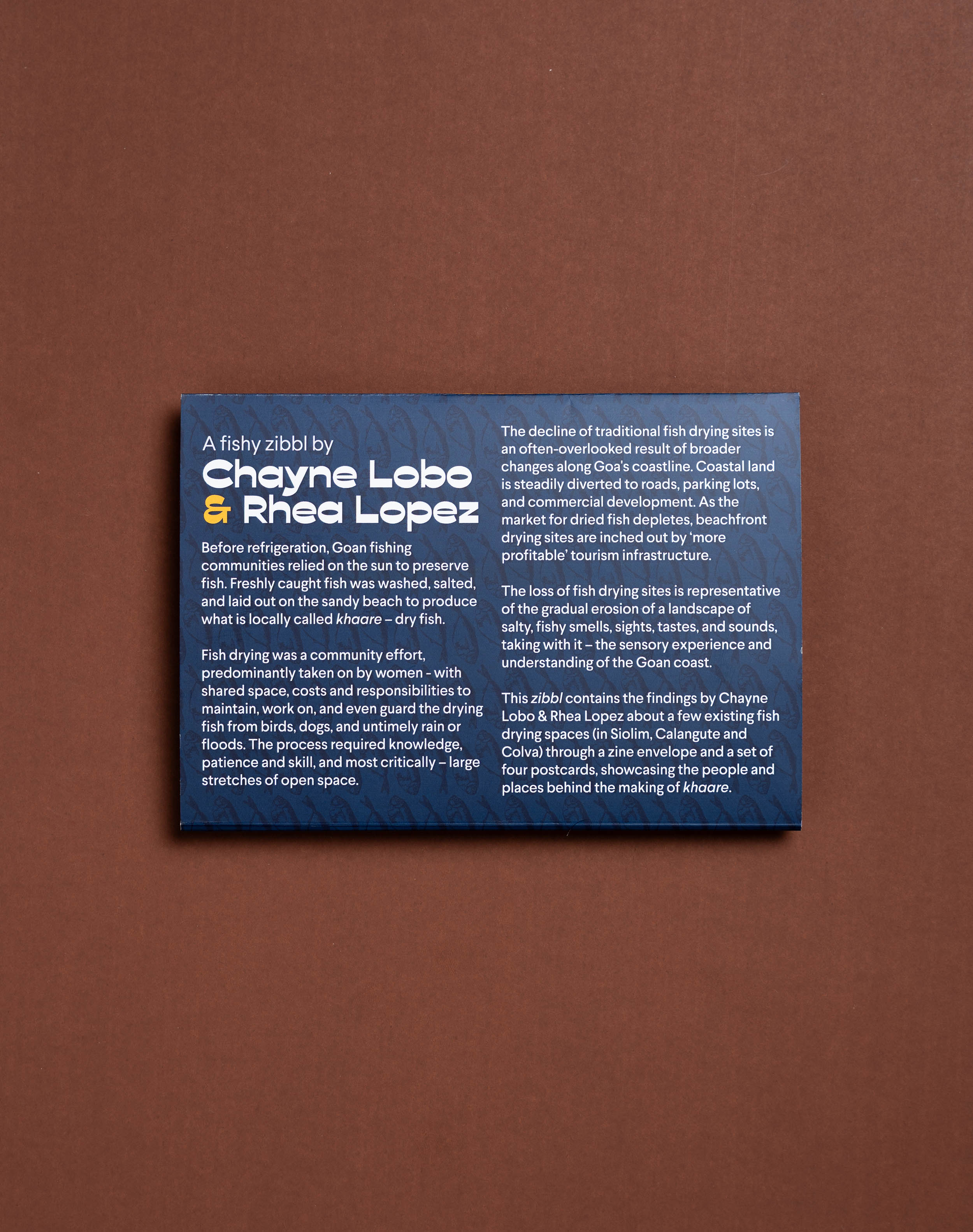
Before refrigeration, Goan fishing communities relied on the sun to preserve fish. Freshly caught fish was washed, salted, and laid out on the sandy beach to produce what is locally called khaare – dry fish.
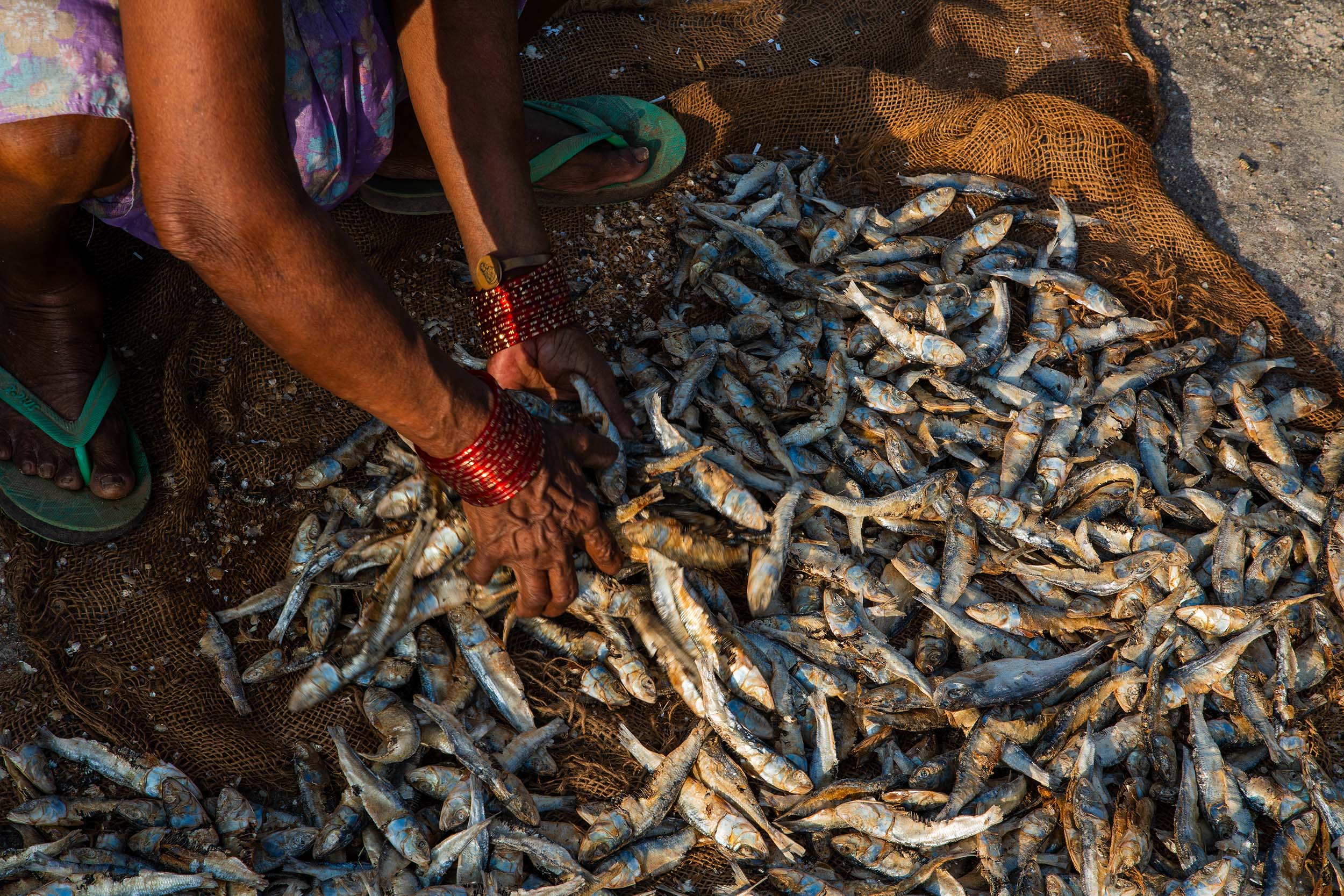
Fish drying was a community effort, predominantly taken on by women - with shared space, costs, and responsibilities to maintain, work on, and even guard the drying fish from birds, dogs, and untimely rain or floods. The process required knowledge, patience and skill, and most critically – large stretches of open space.
The decline of traditional fish drying sites is an often-overlooked result of broader changes along Goa's coastline. Coastal land is steadily diverted to roads, parking lots, and commercial development. As the market for dried fish depletes, beachfront drying sites are inched out by ‘more profitable’ tourism infrastructure.
Traditional fish dryers are forced to abandon the trade altogether, or dry their fish on small, individual patches of ground – often on concrete roads, bridges, terraces – far from the beach.
The loss of fish drying sites is representative of the gradual erosion of a landscape of salty, fishy smells, sights, tastes, and sounds, taking with it the sensory experience and understanding of the Goan coast.
From Chayne:
Growing up, I was a very fussy eater. I would barely eat a full meal and would have certain preferences for textures, flavours, and tastes thanks to my ADHD-fuelled brain. Fish was the least preferred of all the food, that I would scrutinisingly put in my mouth, regardless of the form, be it Mackerel cutlets or Kingfish posta. Brought up in a Goan household and not eating fish felt like being the black sheep of the family. When my mum would tell the world about it, people would look at me and go, "You're not Goan, if you don’t eat fish”, to which I would reply, saying “Oh! I'm from Africa”, joking about my dad’s side of the family.
The reason I primarily got into this hate relationship with fish started with my mum feeding me lies that there were no bones in my morsel of food, and I would get cuts and pokes in my gums.
Since then, I haven't touched fish until I discovered dried Bombil/Bombay Duck through my Grandma, who is from Daman. It was super weird to look at as a kid, but oh man! once it was fried in parra masala, it was the best thing on the planet. Eaten best with a plate of rice, a serving of dal, and papad. Over time, I started microdosing fish and familiarising myself with textures and flavours, but to this day I am super picky about it, and I make an effort to try it at least once before I judge it.
The summer months of April and May would usually be reserved for beach days, road trips to the south, and visiting relatives. We would often see people have these large areas of the road occupied with rice that would be spread out for drying; it would make the air smell of harvest and hay, while on the beachside there would be the peculiar smell of dried saltfish; it's something that we have all grown up seeing and smelling, it's what reminded my olfactory that the monsoon is arriving and that the summer is at it’s end. I used to dread that smell as a kid and run as far as I could to avoid it, and here I am today writing about khaare.
This project came to life during a conversation over chai with Rhea. She had a look on her face that was rather familiar, a look that said, ‘Hear me out, I have an idea!’ and I recall laughing about it. Many months later, summer came, and it was fish-drying season, but the fish were nowhere to be found. Was I too late in visiting the sights? I scrambled from shore to river, to the various sites that I remember seeing growing up, but could barely scratch the surface, so I decided to visit the Mapusa Market and followed my nose until I reached the lane where women were shouting from each side, "Khaare ghe re bhav. Ago bai, khaare ghe". I was lured by the vendors, and so I sparked conversations with them, learning that some women dry on the terraces of their private homes, some of the catch comes from the manos, and some from South Goa.
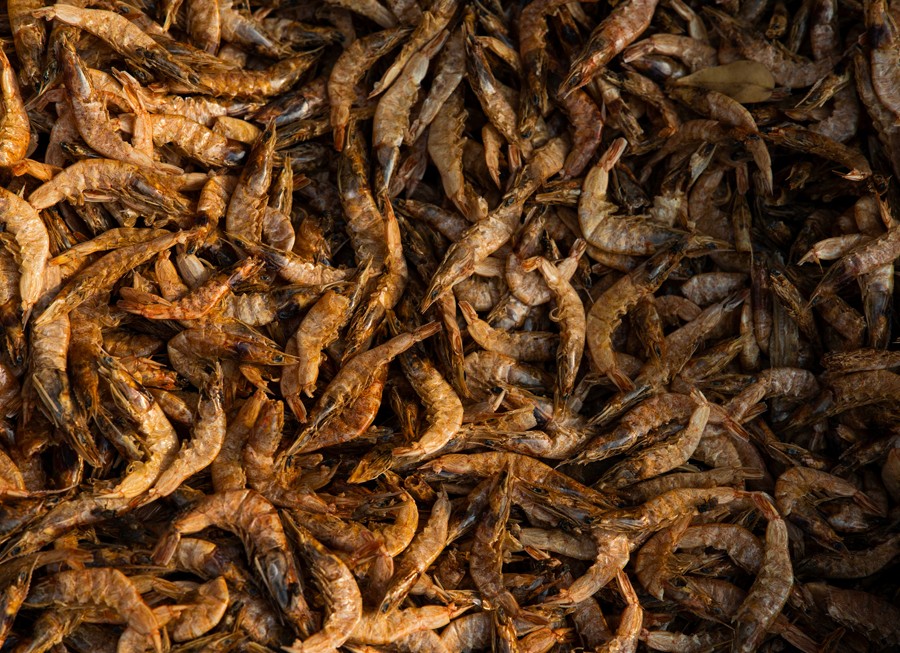
After learning this new information, I started visiting these various sites. Firstly, I went up north through the winding lanes of Chapora around the bay until I reached under the Siolim Bridge, where I met a few women who were drying small catch like vellyo (silverfish) and sungta (prawns) on a concrete retaining wall by the riverside. The women were shy to talk at first, so I started clicking images while slowly making conversation. Mostly Hindu women dry fish in the area; they arrive early in the morning, around 8 am, and spread the fish across the concrete stretch. They leave it there the whole day while they attend to other household chores and return in the evening at dusk to collect their catch.
What you'll receive
An envelope consisting of a poem composed by Rhea along with 4 postcards, 1 from each drying space - Siolim, Calangute and Colva and 1 about khaare. Your purchase could help raise awareness and also provide some financial aid to the women selling khaare for a living.
Disclaimer
All photos have been clicked by Chayne Lobo and text by Rhea Lopez and Chayne Lobo and are part of their intellectual property. Any reproduction or illegal downloads would result in copyright infringement. All zibbls are prohibited within the use of AI models.
